Pipe Burst While You Were Away? How Water Mitigation Dries It Out the Right Way
August 24, 2026
Quick Answer: You walk in the door after a weekend trip, or a week away, and something is wrong before you even see it. The air feels heavy. The carpet squishes underfoot. A ceiling has a brown ring that was not there when you left, and somewhere behind a wall you can hear a faint drip. A supply line let go while the house sat empty, and the water has had days, not minutes, to spread. That gap in time is the single biggest reason a burst pipe you were home for and a burst pipe you were away for turn into two very different jobs.
When a pipe bursts while nobody is home, the water keeps moving into floors, walls, and framing the entire time you are gone, and clean supply-line water starts changing into something dirtier the longer it sits. Proper water mitigation means fast extraction of any standing water, then controlled structural drying with air movers and dehumidifiers, guided by moisture readings that confirm the hidden dampness inside walls and subfloors is actually gone before anything gets closed back up. The surface drying you can do yourself is not the same as drying the structure.
Why Time Away Changes the Whole Job
Water damage restoration professionals sort water into categories based on how clean or contaminated it is, and that category decides how the cleanup has to be handled. A broken supply line or a burst pipe starts out as clean water, the lowest-risk category. If it is dealt with quickly, most of what it touched can often be dried and saved.
The problem is that clean water does not stay clean. Once it soaks into carpet padding, drywall paper, baseboards, and whatever else it reaches, it picks up contamination and begins moving toward the next category within roughly a day or two. Keep sitting, and it can degrade further over the following couple of days. When you are standing in the room within an hour of a pipe letting go, you are dealing with the easy version. When the pipe let go on the first day of a week-long trip, the water has crossed those thresholds on its own, unattended, and the cleanup scope grows to match.
This is why the time-away scenario deserves its own conversation. It is not only that more water came out. It is that the water changed character while you were gone, and it traveled farther into materials that hold moisture and hide it well.
What "Drying It Out" Actually Involves
Most people picture drying as fans in a room and open windows. Real structural drying is a controlled process with a few distinct stages, and each one does a job the others cannot.
The first stage is extraction. Before any drying equipment goes in, standing water gets pulled out with pumps and extraction vacuums, because removing liquid water is many times faster than trying to evaporate it. Every gallon lifted out now is a gallon that does not have to be dried out of the air later.
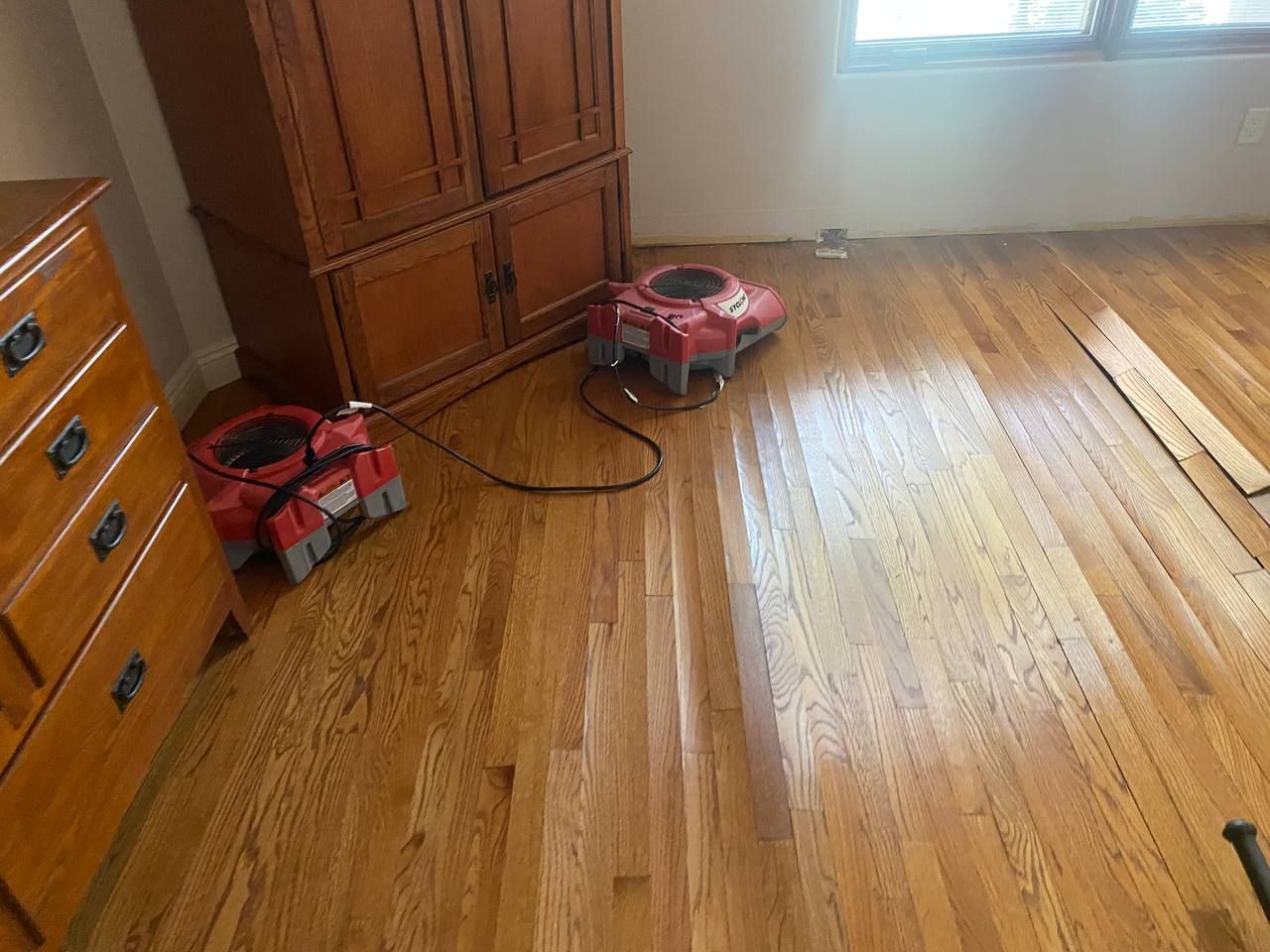
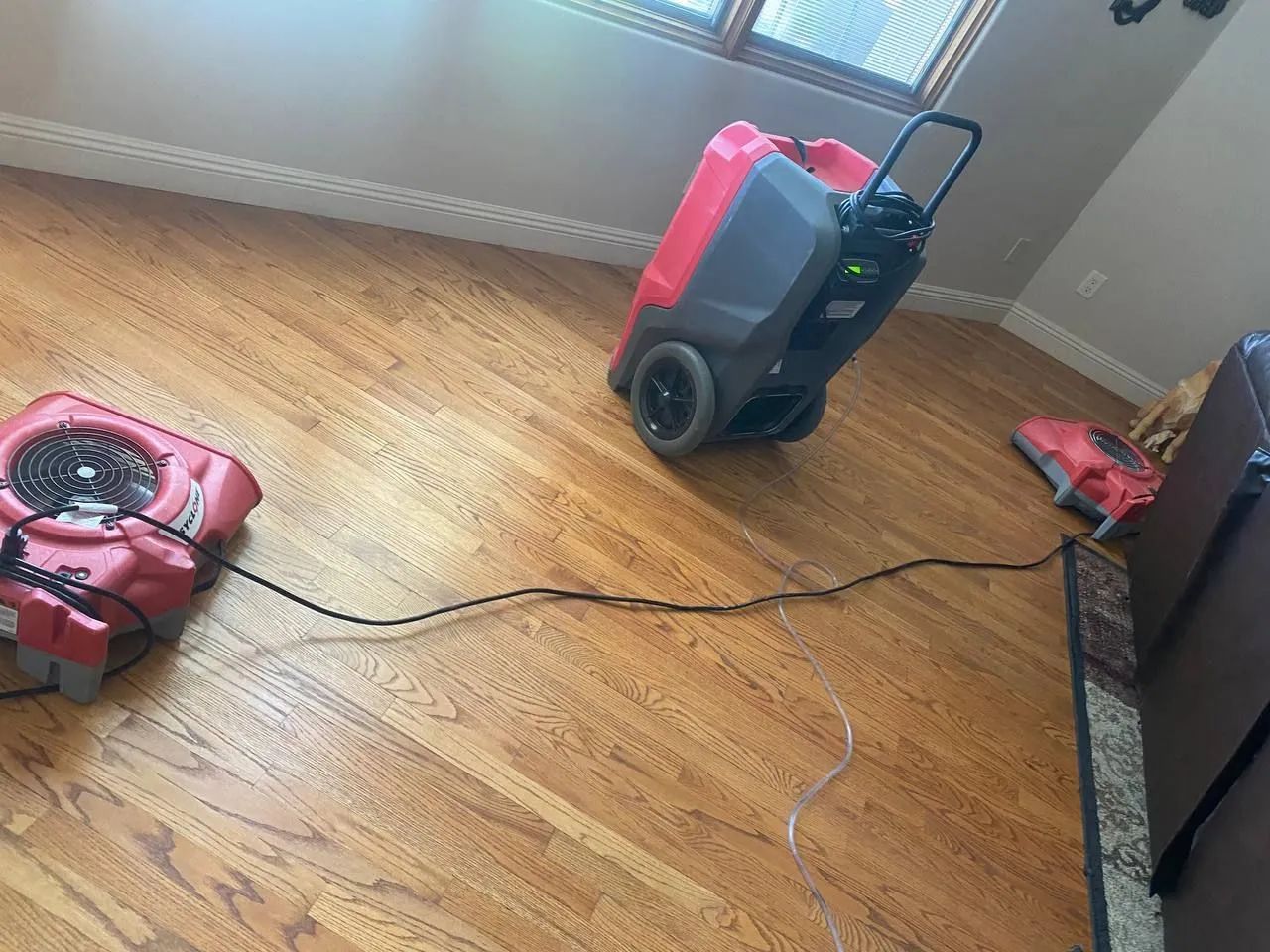
Next comes evaporation. High-velocity air movers get positioned to sweep air across wet surfaces, which lifts moisture out of carpet, wood, and drywall and puts it into the air of the room. Air movers do not dry materials by blowing them. They speed up evaporation by keeping a constant flow of drier air moving across the wet surface.
Then that airborne moisture has to go somewhere, which is the dehumidifier's job. Professional-grade dehumidifiers, often low-grain refrigerant units, pull water vapor out of the air and keep the room's humidity low enough that evaporation can continue. Without them, the air simply saturates and the whole process stalls. Air movers and dehumidifiers work as a pair: one loads the air with moisture, the other takes it away, and the cycle repeats until the materials reach a normal dry reading.
Tip: If you get home to a fresh leak and the water is still shallow and clean, mopping and toweling up the surface water before help arrives actually helps, because it removes moisture that would otherwise soak in further. Pull rugs off wet floors and lift furniture legs onto foil or wood blocks so they stop wicking. Stop at the surface, though. Prying up flooring or opening walls yourself can spread contamination and make the drying plan harder to execute.
Finding the Water You Cannot See
The trap with a burst pipe, especially one that ran for days, is that the surface dries long before the structure does. A carpet can feel dry on top while the pad underneath stays soaked. Drywall can look fine at eye level while the bottom of the cavity holds water. This is exactly where New Mexico's dry climate plays a trick on homeowners. Our low humidity dries the visible surfaces fast, which makes it easy to believe the problem is handled, while moisture trapped inside wall cavities and under flooring lingers for weeks with nothing pulling it out.
Professionals do not trust their eyes for this. They use moisture meters to measure the actual moisture content inside materials and thermal imaging cameras to spot the cool, damp areas that hide behind finished surfaces. That mapping turns an invisible problem into a set of marked spots on a wall, which is what lets a crew aim the drying equipment where the water actually went instead of where it appears to have gone. It also gives everyone a baseline to measure against as the drying progresses.
Skipping this step is how a cleanup that looks finished turns into a musty smell and a mold problem a month later. The water you can see is rarely the water that causes the lasting damage.
What Gets Dried in Place, and What Has to Come Out
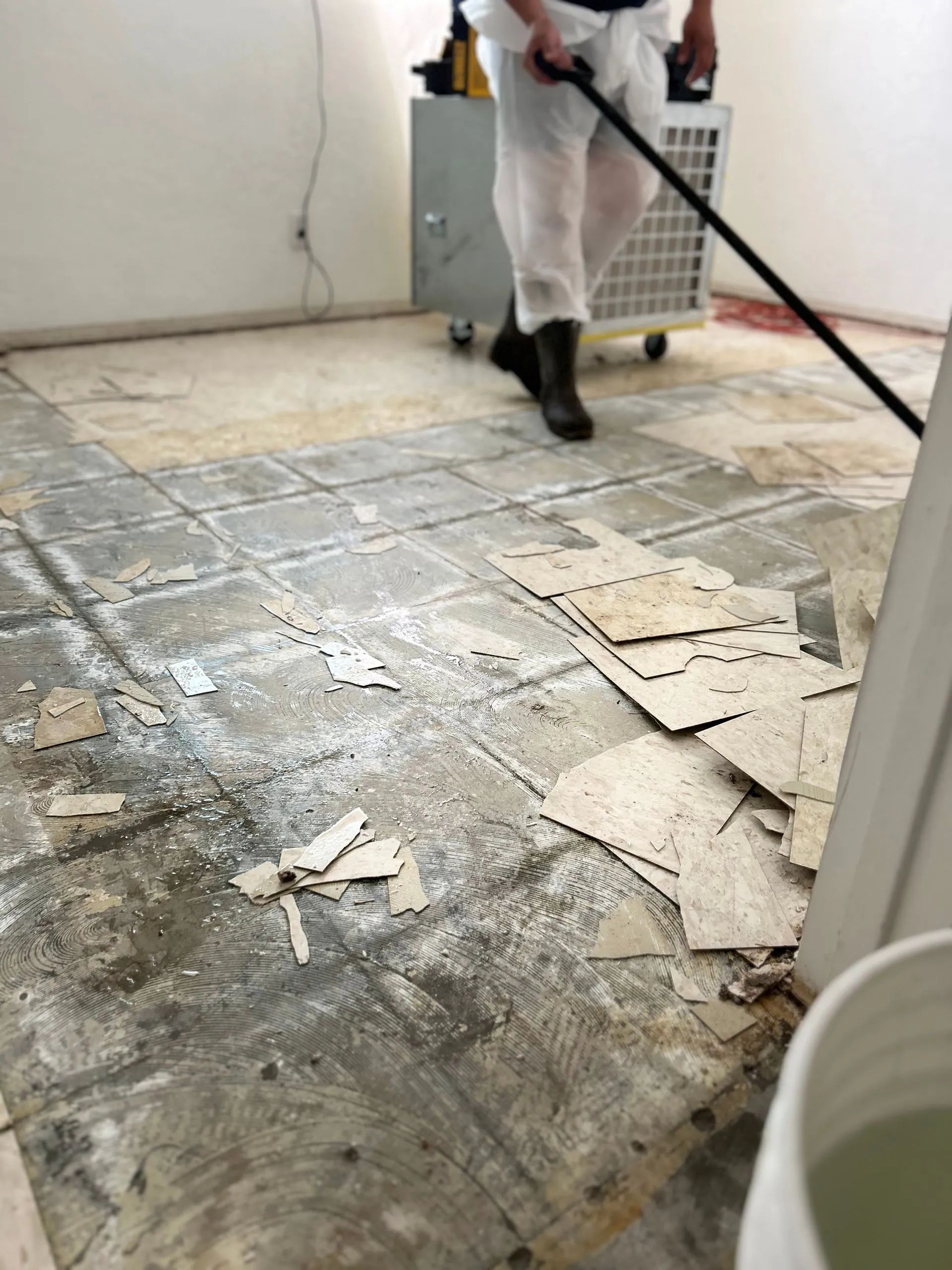
Not every wet material can be saved, and the deciding factors are how contaminated the water became and how much a given material soaked up. Solid, non-porous surfaces like tile and sealed concrete clean up and dry well. Structural framing can usually be dried in place once the surrounding materials are managed.
Porous materials are where the decisions get made. Carpet padding acts like a sponge and is frequently removed rather than dried, particularly once the water has aged past its clean-water stage. Drywall that wicked water up from the floor is often cut away along the bottom, a step called a flood cut, so the wall cavity behind it can be dried and treated rather than sealed up wet. Saturated insulation loses its structure when soaked and typically comes out. The goal is not to demolish more than necessary. It is to remove only what cannot be brought back to a safe, dry condition, and to preserve everything that can.
The longer the water sat, the more the balance tips toward removal. A pipe caught in the first hour might mean drying the carpet and saving the drywall. The same pipe caught after a week away might mean pulling pad, making flood cuts, and treating the cavities, simply because the water had time to do more and to grow dirtier while it did it.
Warning: Damp materials left inside a closed wall can begin developing mold within roughly one to two days of getting wet, and no amount of scented spray or surface wiping addresses moisture trapped behind the drywall. If a burst pipe soaked framing or insulation while you were away, closing the wall back up before it is confirmed dry with a meter reading tends to seal the problem in rather than solve it. Confirmed dry, then closed, is the order that protects the repair.
How Long Honest Drying Actually Takes
Homeowners often expect a wet room to be dry by the next morning. Structural drying usually runs a few days, commonly in the range of three to five, and the exact length depends on how much water there was, how long it sat, how many materials are involved, and the conditions in the space. A crew sizes the equipment to the room, often planning for one dehumidifier per several hundred square feet of affected area plus enough air movers to keep the air turning over several times an hour.
What separates a real drying job from guesswork is the monitoring. Moisture readings get taken and logged each day and compared against a target dry standard, which is essentially what those same materials read in an unaffected part of the house. The equipment stays in place and running until the readings hit that target, not until the surfaces feel dry to the touch. That daily record is also how you know the job is actually finished, rather than merely looking finished.
Pulling equipment early to save a day is one of the most common ways a water problem comes back. The materials that felt dry were only dry on the outside.
Frequently Asked Questions
The water looks gone and the floor feels dry. Do I still need anything done?
Possibly. Surface dryness does not confirm hidden areas are dry. Moisture readings inside walls, beneath flooring, and throughout affected materials can determine whether drying is complete or moisture remains concealed.
Can I just run my own fans and a rental dehumidifier?
They may help with small, fresh spills, but larger losses often require professional equipment and monitoring. Without moisture readings, you may stop drying too early and leave hidden moisture behind.
Why does it matter how long the pipe was leaking?
Leak duration affects how deeply water spreads, how much material becomes saturated, and contamination risk. A brief leak may need limited drying, while days of exposure can require extensive removal and treatment.
Will the walls have to be torn open?
Not necessarily. If drywall or wall cavities are wet, partial removal may allow proper drying. When caught early and uncontaminated, some materials can remain. Moisture readings help determine the appropriate approach.
How do I know when the drying is truly finished?
Drying is complete when affected materials reach appropriate moisture levels comparable to unaffected areas. Professionals confirm this through documented readings taken during the drying process, rather than relying on how surfaces feel.
Could a leak that happened days ago already be growing mold?
Yes. Mold can begin developing on damp materials within roughly one to two days. A leak left unnoticed for several days should receive thorough inspection, moisture testing, and drying to address lingering conditions.
Proper Drying Prevents Lasting Water Damage
A burst pipe can leave far more damage behind than what is visible after the standing water disappears. Hidden moisture beneath flooring, inside drywall, and throughout structural materials can continue causing deterioration long after the room looks dry. Proper water mitigation focuses on finding that moisture, removing what cannot be saved, and carefully drying the remaining structure. This measured approach helps protect the home from lingering odors, material damage, and moisture-related problems that can develop later.
For homeowners in Albuquerque, New Mexico, the region’s dry climate can make surface drying especially misleading. NM Abatement LLC
brings 30+ years of combined experience between Erik and Clovis to water mitigation work throughout Albuquerque and surrounding communities. Their focus on moisture readings and monitored structural drying helps ensure affected materials reach appropriate dry conditions before repairs begin. That attention to what cannot be seen is what separates a complete restoration from a cleanup that only appears finished.