Renovating a Mid-Century Home? Why Old Materials Get Tested First
July 6, 2026
Quick Answer: Before renovation or demolition on an older home, certified professionals test suspect materials because many products made before the 1980s can contain asbestos, and those materials are generally only a hazard once they are disturbed. A visual survey plus laboratory sampling identifies what is present so the work can be planned safely. Federal EPA regulations and the New Mexico Environment Department require a thorough inspection before many demolition and renovation projects, and disturbing a suspect material before it is checked can release fibers that are too small to see. Testing first is what keeps the rest of the job controlled.
You finally have the plans drawn up for that 1962 ranch house. The kitchen is coming out, the popcorn ceiling is going, the old floor tile in the back hallway is getting ripped up, and you are ready to swing the first hammer. Then the contractor or the abatement crew says the same thing everyone keeps saying: nothing gets demolished until the old materials are tested. It feels like a delay you did not budget for, and you are tempted to just start pulling things apart yourself.
Here is why that testing step is not red tape. In homes built before the late 1980s, a long list of common building products was made with asbestos, and the only way to know what a given material contains is to sample it and have a lab look. Those materials are usually harmless while they sit undisturbed. The moment a saw, a scraper, or a pry bar breaks them open, they can release microscopic fibers into the air. That is why professionals test first and demolish second, and why the sequence matters so much on an older New Mexico property.
Why Older Homes Get the Extra Scrutiny
Asbestos is a naturally occurring mineral fiber that was prized for decades because it resists heat and corrosion. According to the U.S. Environmental Protection Agency, it was used across a wide range of construction materials for insulation and as a fire retardant, which is exactly why it turns up so often in mid-century and older housing stock.
The age of the building is the first clue a professional looks at. The EPA and abatement crews treat structures built before the late 1980s as likely to contain asbestos somewhere, because that is the window when these products were widely installed. In New Mexico, that covers a lot of ground, from the mid-century ranch homes around Nob Hill and older commercial buildings along established corridors to adobe and stucco properties that have been repaired and remodeled several times over the decades. Each past renovation can leave behind a patchwork of materials from different eras, which is one more reason a visual guess is not enough.
None of this means an old house is dangerous to live in. The EPA is specific on this point: exposure generally occurs only when an asbestos-containing material is disturbed or damaged in a way that releases particles and fibers into the air. A floor tile you walk on or a ceiling you never touch is a very different situation from that same material being cut, sanded, scraped, or torn out during a remodel. Renovation is precisely the moment those materials get disturbed, which is why testing lines up with the start of a project rather than day-to-day living.
The Materials a Professional Wants to Check
When a certified inspector walks an older home before renovation, they are not sampling everything at random. They are looking at the specific product categories that the EPA identifies as common places asbestos was used. Knowing the usual suspects helps you understand why certain parts of your project get flagged.
Flooring and the adhesive under it
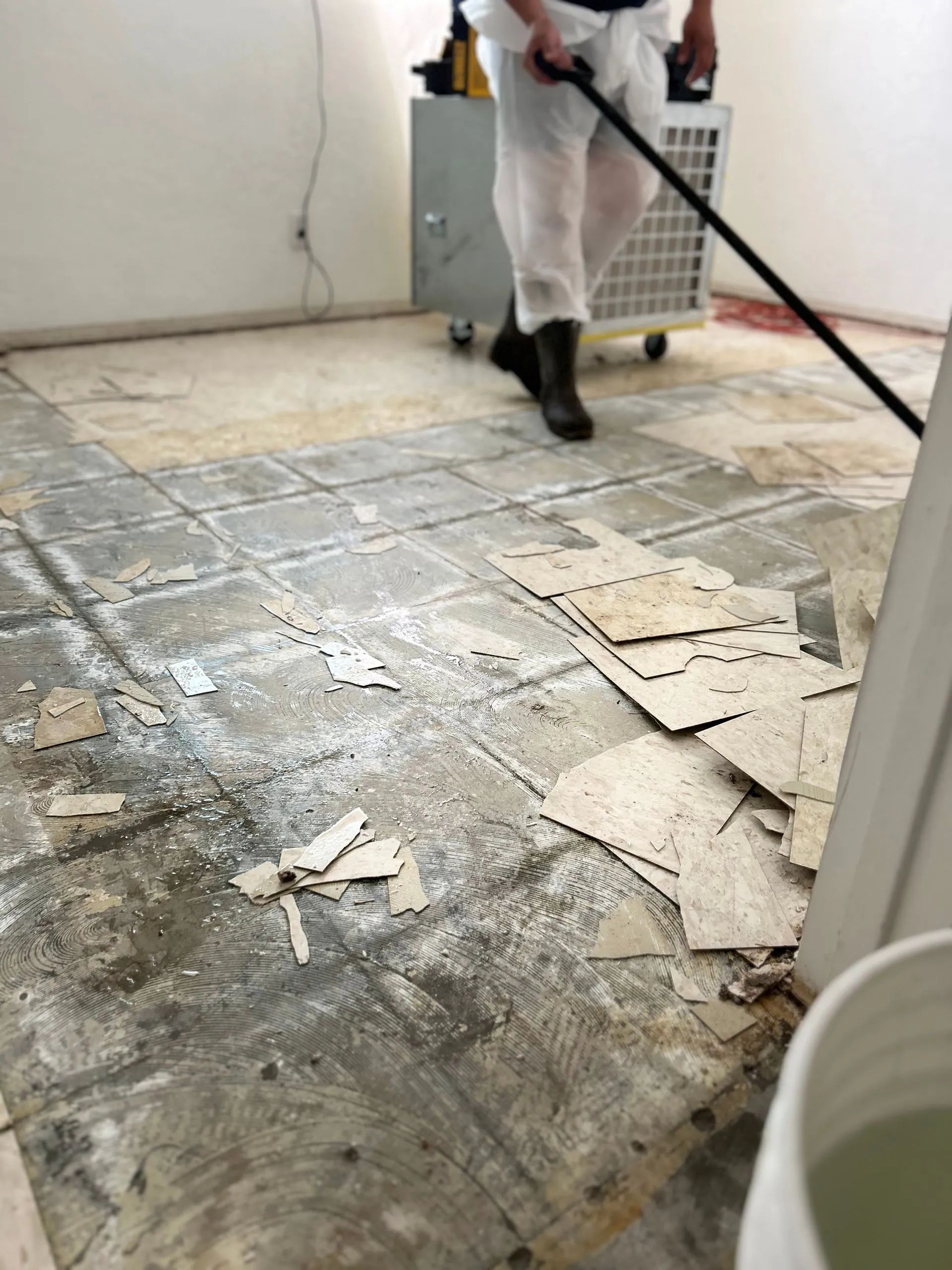
Vinyl floor tiles, the backing on vinyl sheet flooring, and the adhesives or mastic used to stick them down are all on the EPA list of materials that may contain asbestos. This is a big one during renovations because pulling up old flooring is often step one, and the mastic underneath is easy to overlook.
Textured paint, patching compounds, and popcorn ceilings
The EPA specifically names textured paint and patching compounds used on walls and ceilings. That includes the popcorn ceiling texture many homeowners are eager to scrape off. Scraping is exactly the kind of disturbance that can release fibers, which is why that ceiling gets sampled before anyone starts.
Insulation on pipes, in the attic, and around old appliances
Hot water and steam pipes were often coated with asbestos material or wrapped with asbestos tape or blankets. Certain attic and wall insulation was produced with vermiculite that can be contaminated with asbestos. Older furnaces and wood-stove surrounds sometimes used asbestos paper, millboard, or cement sheet.
Roofing, siding, and cement products
Roofing and siding shingles are on the EPA list, along with asbestos cement products. On a renovation that touches the exterior or the roof, these get looked at too.
You do not have to memorize this list. The point is that a professional survey is systematic, matching the age of the home to the product categories most likely to contain asbestos, then sampling the ones your specific project will disturb.
Tip: Before the inspection, make a simple list of everything your renovation will actually cut into, remove, or demolish, room by room. Sharing that scope with the inspector helps them focus sampling on the materials you are going to disturb, rather than testing things that will never be touched. It makes the survey faster and gives you a cleaner picture of what your project involves.
Why a Visual Look Is Never the Whole Answer
It is reasonable to ask why a crew cannot just eyeball a material and know. The honest answer is that asbestos fibers are microscopic. Both OSHA and the EPA are clear that the fibers tied to health risks are far too small to be seen with the naked eye. A floor tile that contains asbestos looks like an ordinary floor tile. Popcorn texture that contains it looks like popcorn texture that does not.
That is why identification depends on laboratory analysis, not appearance. A qualified sampler carefully collects small pieces of the suspect materials and sends them to a lab, which examines them under magnification to determine whether asbestos is present and what type. In New Mexico, the state does not run its own sampler licensing program; the New Mexico Environment Department recognizes samplers who are qualified in another state or under the EPA AHERA program. The takeaway for a homeowner is that the person taking those samples should be properly trained, and the analysis happens in a lab rather than on a hunch.
Guessing wrong in either direction causes problems. Assume a material is safe and demolish it, and you may have released fibers through the whole work area. Assume the worst about a material that turns out to be clean, and you have paid for handling you did not need. Testing replaces both guesses with an answer.
How the Testing Step Fits the Whole Project
Testing is not a standalone errand. It is the front end of a controlled sequence, and it shapes everything that follows.
Once the lab results come back, the findings drive the plan. If materials come back clean, your renovation can move ahead without asbestos-specific handling for those items. If a material tests positive, that is when the familiar abatement measures come into play: sealed containment zones, negative air pressure with HEPA filtration to keep fibers from drifting into occupied space, careful removal by trained crews, and waste that is double-bagged in leak-tight, labeled containers for disposal at an authorized facility. After the work, independent clearance testing confirms the air meets the applicable standards before the space is reoccupied.
Notice that every one of those steps depends on the first one. You cannot build the right containment, choose the right removal method, or prove the space is clean afterward if you never established what was there to begin with. That is the real reason old materials get tested first. It is not caution for its own sake. It is the measurement that makes a safe, compliant renovation possible instead of a cleanup after the fact.
Frequently Asked Questions
Why can't the contractor just tell me by looking whether a material has asbestos?
Asbestos fibers are microscopic and cannot be seen without laboratory equipment. EPA and OSHA both confirm visual inspection is unreliable. Only proper sampling and lab analysis can determine whether a material contains asbestos or is safe to disturb during renovation work.
My house is old but everything looks fine. Do I really need testing before I remodel?
Yes. Undisturbed materials may appear safe, but renovation activities can release fibers if asbestos is present. EPA guidance notes risk arises when materials are disturbed, making pre-renovation testing essential before demolition, cutting, scraping, or removing building components begins.
Which materials are most likely to be sampled in a mid-century home?
Common suspect materials include vinyl floor tiles, adhesives, popcorn ceilings, textured paints, pipe insulation, attic vermiculite, roofing shingles, siding, and cement products. EPA identifies these as typical asbestos-containing materials that should be tested before renovation disturbs them.
Is asbestos testing before renovation actually required, or just recommended?
Requirements vary by project. EPA NESHAP regulations require inspection before certain renovations and demolitions, and state agencies like New Mexico Environment Department enforce compliance. Even when not strictly required, testing is strongly recommended for safety and regulatory clarity.
Does asbestos in my home mean my family is being harmed right now?
Risk depends on disturbance, not just presence. EPA notes asbestos exposure occurs when fibers become airborne during damage or renovation. If materials remain intact, risk is lower. Health concerns should always be discussed with a qualified medical professional.
Getting the Sequence Right on an Older Home
A renovation on a mid-century home is exciting, and the urge to start tearing things out is understandable. The reason professionals insist on testing suspect materials first comes down to this: many products made before the late 1980s can contain asbestos, those materials are generally only a hazard once they are disturbed, and the fibers are impossible to identify by sight. Sampling and laboratory analysis replace guesswork with an answer, and that answer is what makes every later step, from containment to clearance, actually work. Skip it, and you are demolishing blind. Do it first, and the rest of the project stays controlled from day one.
Schedule a
pre-renovation asbestos survey
before demolition begins — Before you open up walls, ceilings, or old flooring in an older New Mexico home, the materials your project will disturb should be identified so the work can be planned and contained safely. With 30
years of experience, NM Abatement LLC
provides certified inspection and laboratory testing of suspect materials for properties in Albuquerque and the surrounding communities of New Mexico, then handles containment, controlled removal, compliant disposal, and final clearance testing if abatement is needed. Book your inspection and know what is in the walls before the first wall comes down.